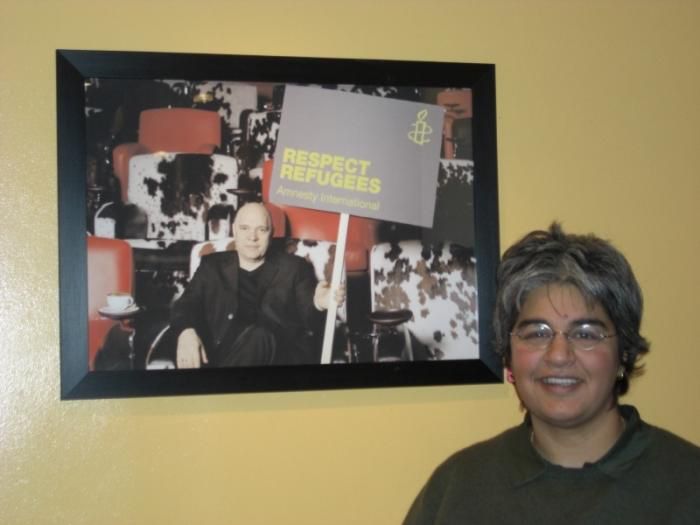
Salma is a UK based psychotherapist, medical anthropologist, and clinical supervisor with over three decades of experience in intercultural care, trauma, psychoanalysis, and higher education. Until recently she was Associate Professor of Psychoanalytic Anthropology in Human Development at a graduate institution in New England. She is a Fellow of both the Royal Society of Arts (FRSA) and the Royal Anthropological Institute (FRAI), and a long-standing member of international professional bodies including the UKCP, APA, AAA, EASA, ITA, and EATA.
Her practice is rooted in the interstices of psychoanalysis, existential philosophy, and anthropology. She is not simply a therapist or an academic, but a “curious explorer” of the human psyche — drawn to the haunted, the relational, and the not- yet-known. Her work, both clinical and conceptual, challenges the idea of identity as bounded and autonomous. Instead, she proposes that we are archives of experience, shaped not only by what we remember, but by what has remembered us.
Salma draws inspiration from literary and philosophical thinkers, particularly Michael Ondaatje’s notion that we are made of “communal books,” layered by our relationships, our histories, and our inheritances. This ethos runs through her supervision and facilitation: a refusal to reduce healing to individual pathology, and a constant return to the communal, the cultural, and the collective. She teaches others not just to analyse, but to witness. Not just to observe, but to be observed.
In Salma’s words, “What strikes me about myself is not what I know, but what I allow myself not to know” — a radical ethic of presence, uncertainty, and professional courage that underpins her approach. She navigates the friction between fact and fiction, between empirical data and imaginative insight, as not a contradiction but a site of clinical and cultural revelation.
Her writing and teaching reflect an “archaeology of selfhood”: an effort to excavate not just the ego, but the layered sediments of identity, community, and memory. She challenges the neat binaries of private and public, self and other, personal and political, and works with students, clinicians, and practitioners to inhabit the messy thresholds of real experience. Her work is deliberately unsettling. It refuses the comfort of fixed categories, and dares to ask what it means to become human together — and how we fail to become human alone.
Through decades of work with refugee and asylum-seeking communities, educators, NGO staff, and healthcare professionals across conflict-affected regions, Salma has borne witness to profound suffering and resilience. She has held space in medical clinics, post-war settings, classrooms, and therapy rooms — never as a neutral observer, but as a participant in the complex ecology of meaning-making.
Third Space Practice is the culmination of that trajectory. It is a space that honours relational depth, political context, and the courage to stay with the trouble. Here, Salma continues to co-create settings where cultural legacies, therapeutic insight, and ethical repair can meet — not in easy synthesis, but in tension, curiosity, and care.