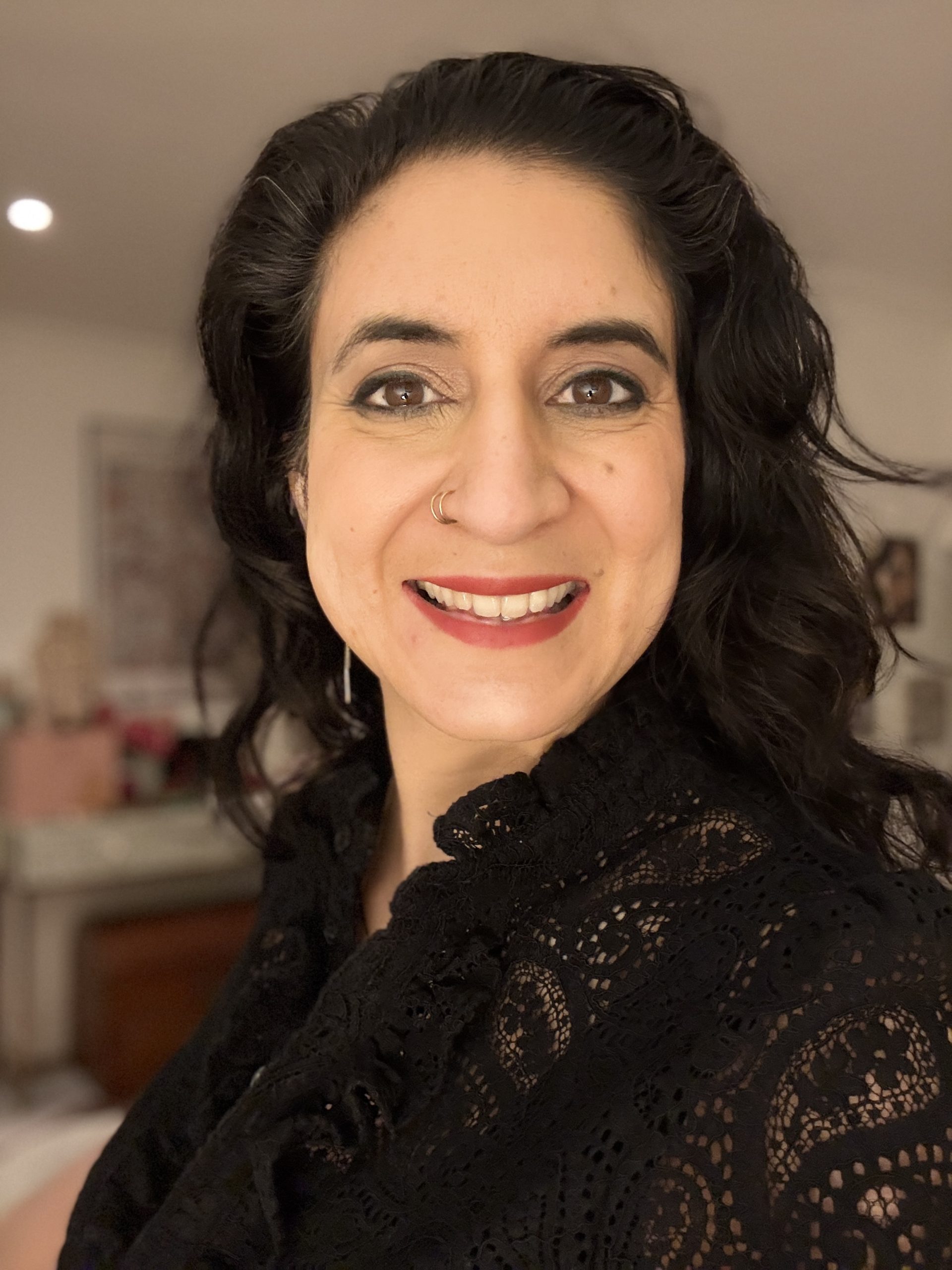
Bea works with individuals and communities navigating layered, often unnameable transitions: existential, cultural, and political. Her work is grounded in existential psychotherapy, liberation psychology, post-theological reflection, and decolonial critique. She offers a practice shaped less by intervention than by witnessing, relational depth, and critical thought.
She works especially with those living in fractured or liminal spaces: people carrying complex identities, navigating grief, cultural displacement, neurodivergence, institutional harm, or the disorientation of spiritual deconstruction. Her practice resists diagnostic reduction and instead holds space for people to move toward self-understanding on their own terms.
Bea lectures in London on cultural difference, ethics, personal change, systems theory, family dynamics, and the politics of sex and gender. She supervises both Masters and Doctoral students working with autoethnographic and qualitative methodologies. Her own research explores autoethnography as epistemic resistance, reframing trauma not as private pathology but as testimony to systemic entanglement and the possibility of repair. Bea was raised by German humanitarians in South Asia, with her formative years in Pakistan. In her thirties she lived and worked in Afghanistan, and altogether she has spent eighteen years across the region. Her life and work have also taken her through Germany, France, Spain, the United States, Australia, Tanzania, and the United Kingdom. She speaks English and German as mother tongues, is fluent in French, and carries Urdu as part of her cultural inheritance. These movements across languages and countries shape her intellectual and political commitments, particularly around questions of hybridity, estrangement, and epistemic justice.
Now based in South London, she lives with her partner, two young daughters, and a Spitz dog with big opinions. She believes in stories, silence, and rest, as both leisure and as resistance to systems that confuse urgency with care.